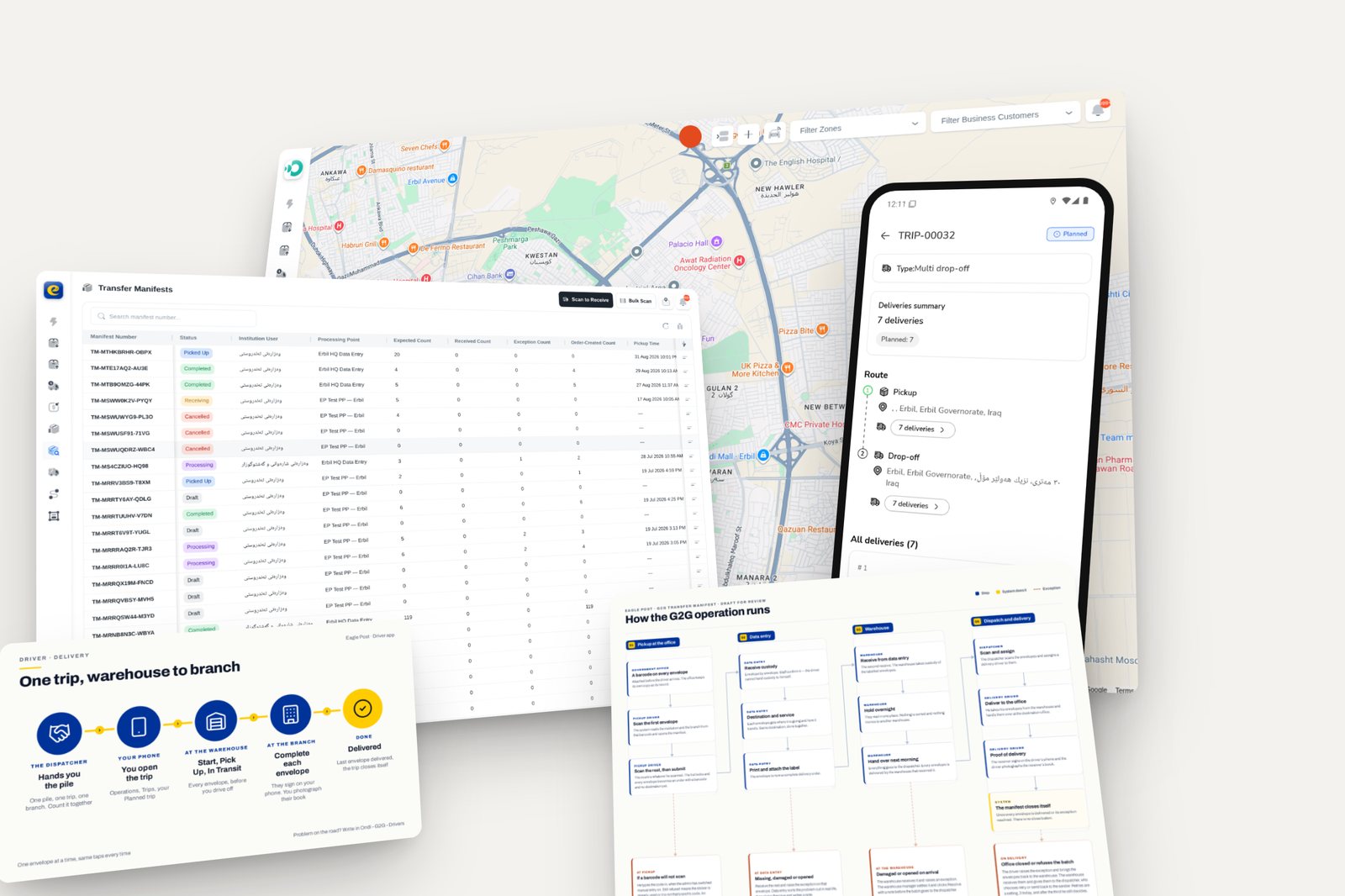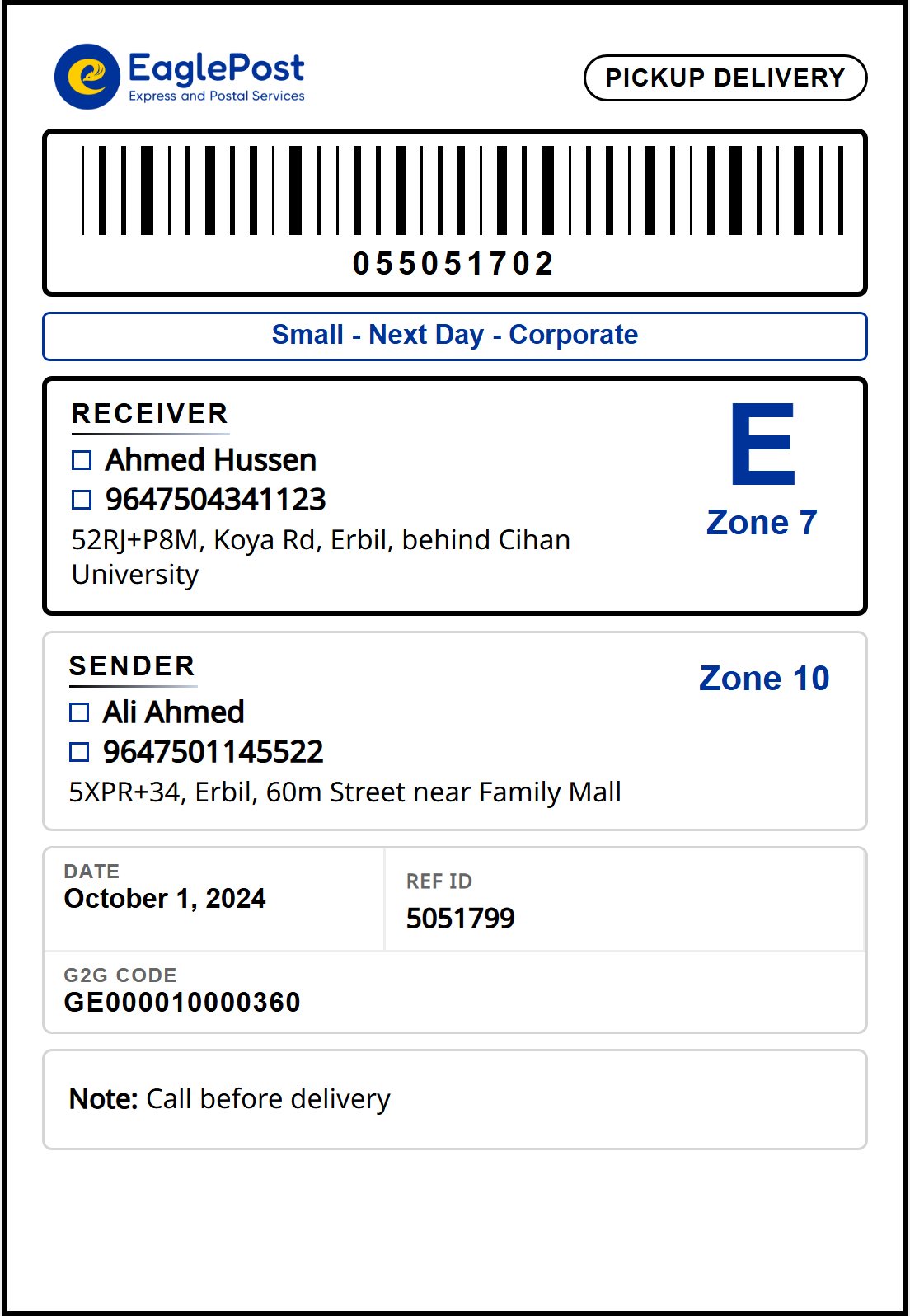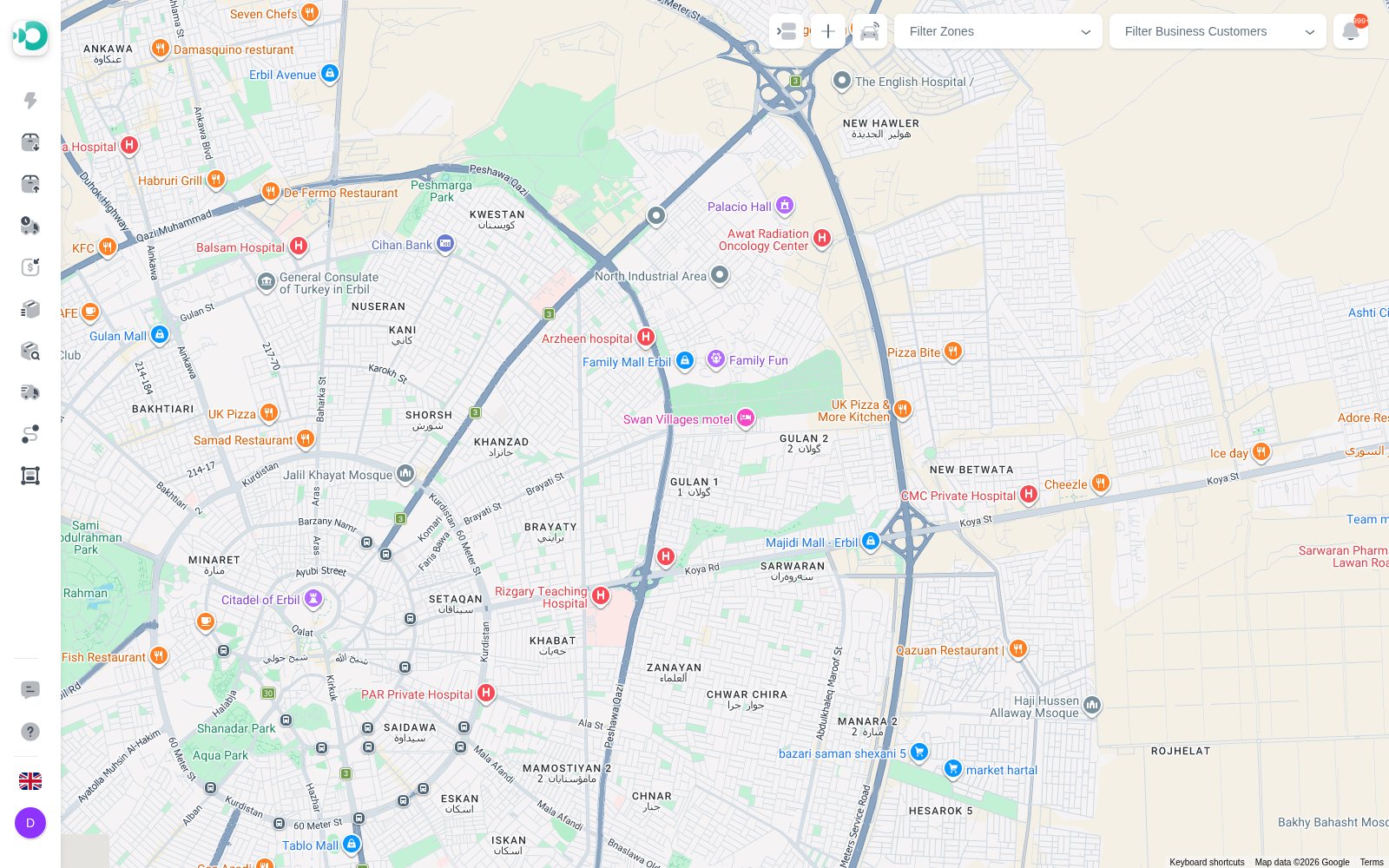
Eagle Post is the Kurdistan Region's postal company. When I joined in April 2026 its delivery operation ran on a legacy platform and a lot of paper. Dispatchers built 60 to 70 driver routes by hand every day. Price changes went over WhatsApp, with screenshots as the only record. Returns ran on a paper manifest with no proof of return. The warehouse had no role of its own — staff worked on dispatcher accounts, with no inventory, no export, no way to move stock between warehouses.
My job was to own the replacement, Ondi, and get it into use.
What I did
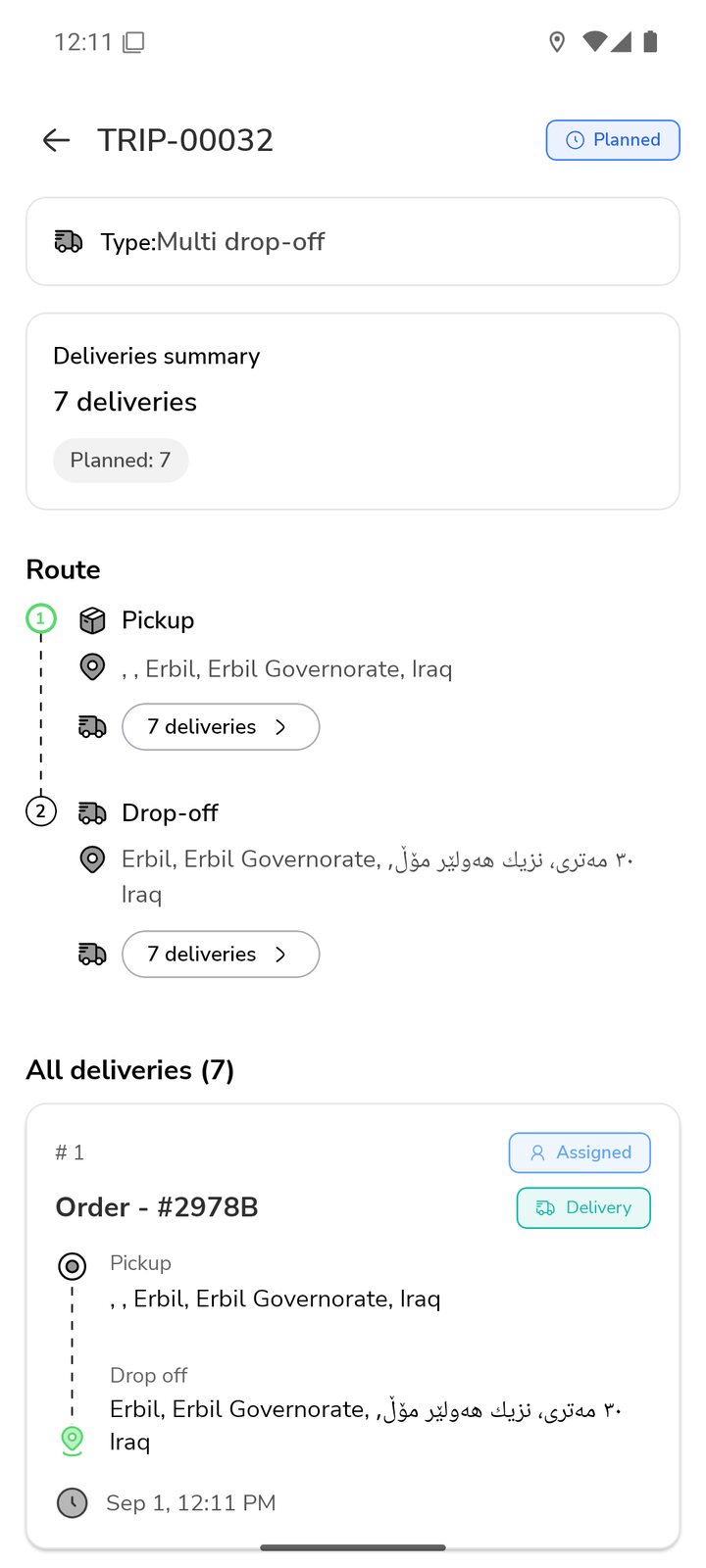
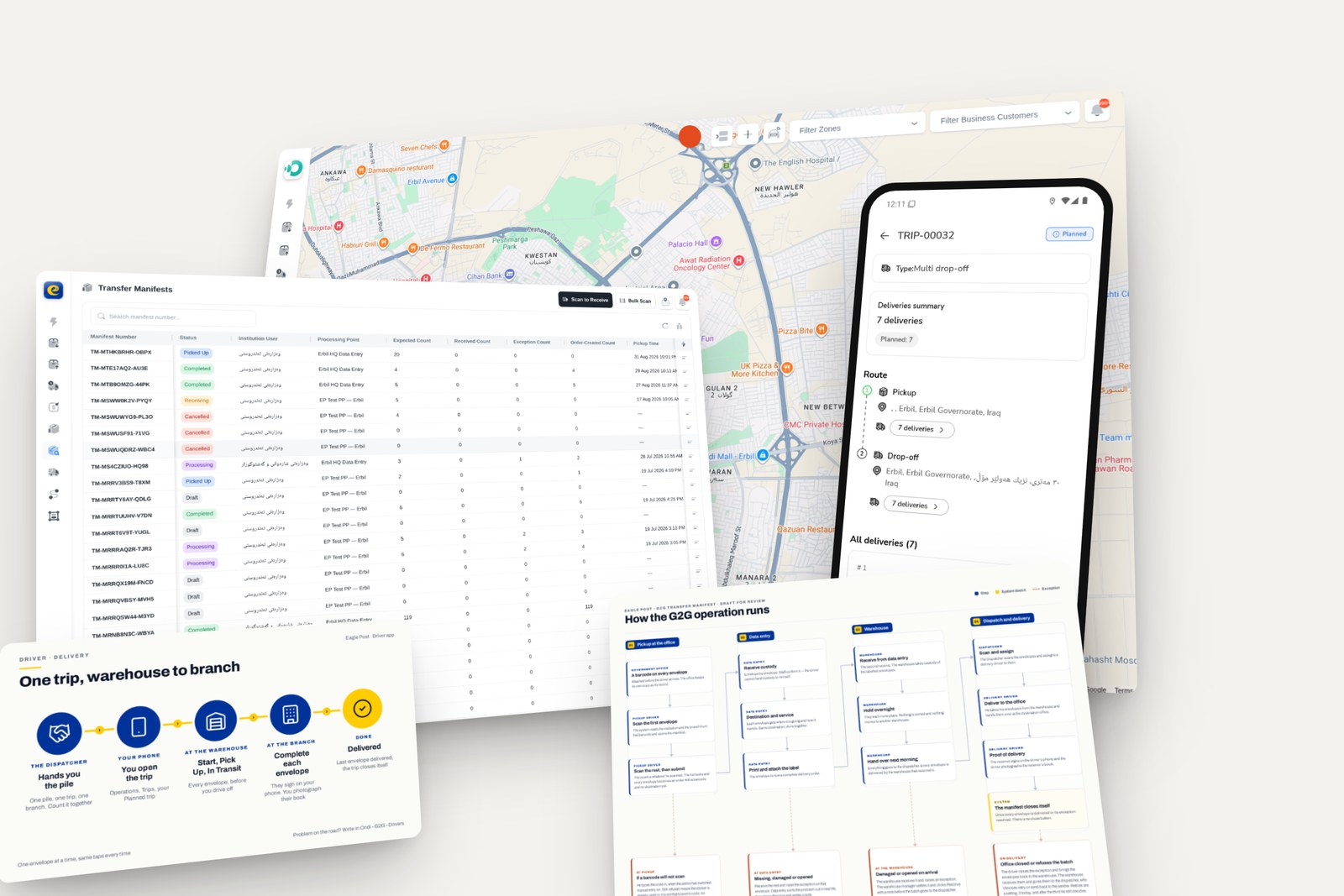
I started with the operation, not the software: an as-is assessment across five departments — dispatch, warehouse and drivers, back office, the call centre, sales and finance. Then the to-be: specifications for 13 modules, from payments and wallets to routes, warehouse management, returns, roles, the driver app and government mail.
The contract listed 87 requirements. I turned that into a living document and tracked every one against what was actually being delivered. Every delivery from the vendor went through my own accept-or-reject gate, each with its own written test page. Bi-weekly product reports, a decisions log, weekly roadmap reviews, and a launch plan of seven dated checkpoints working back from go-live.
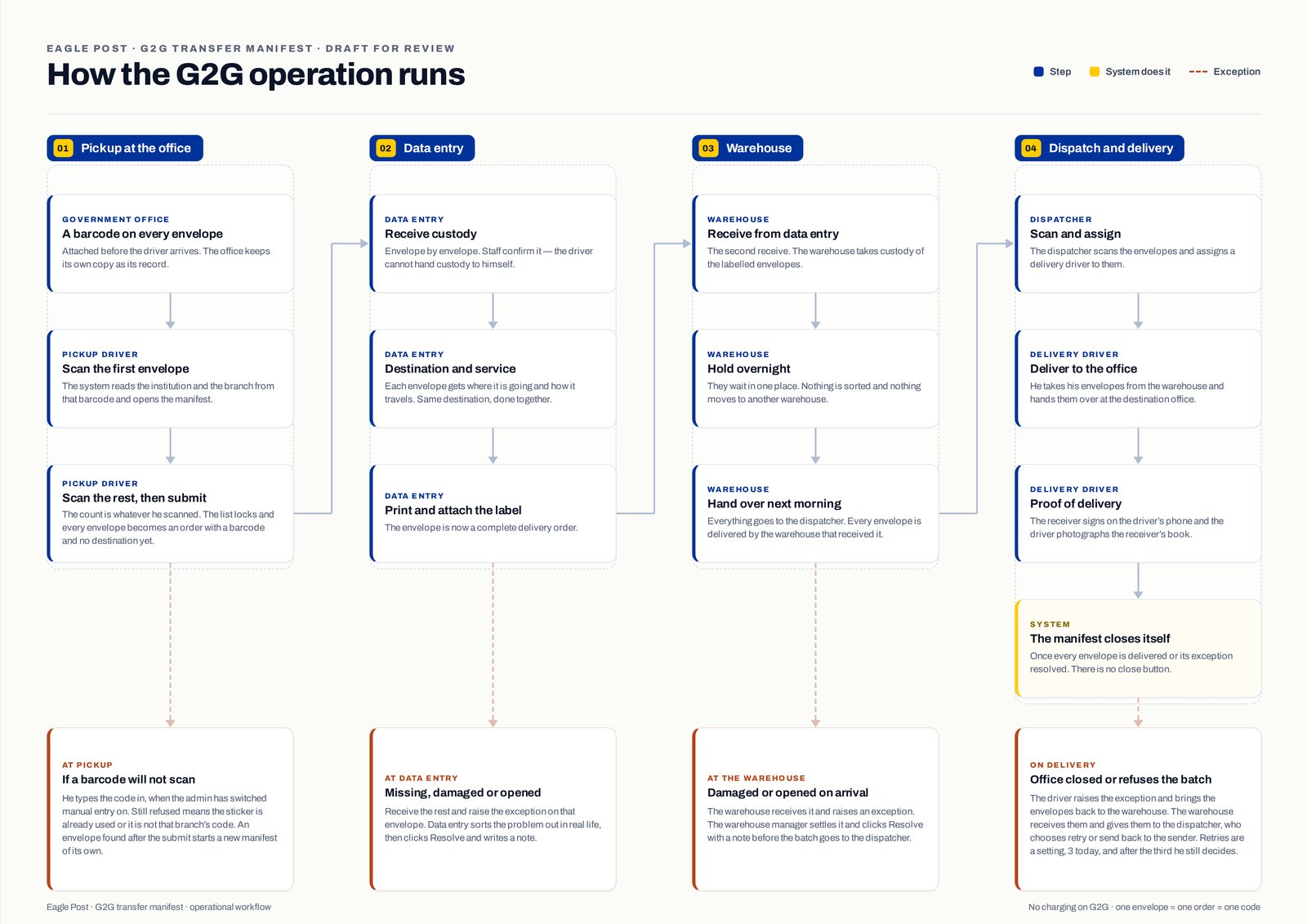
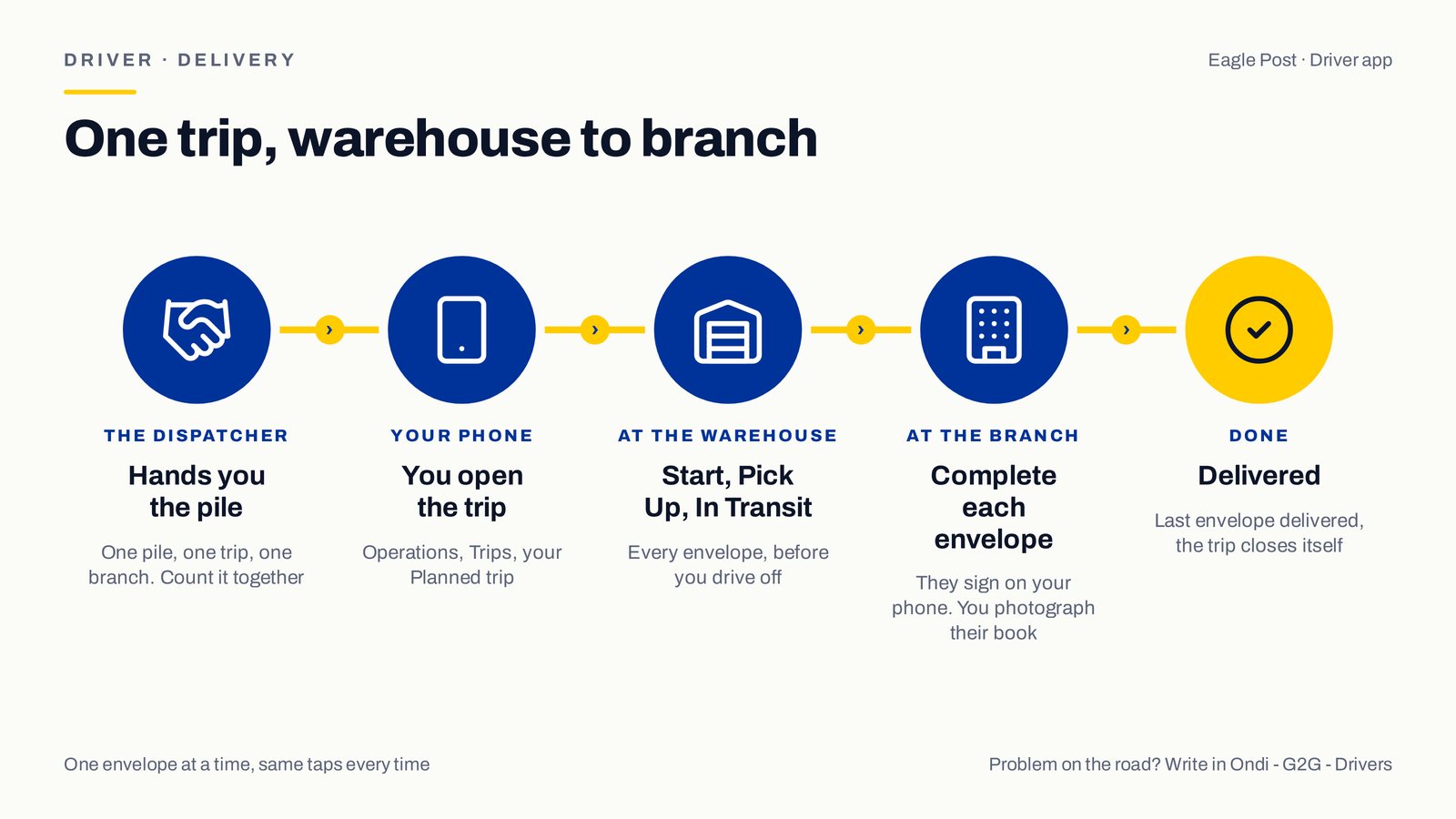
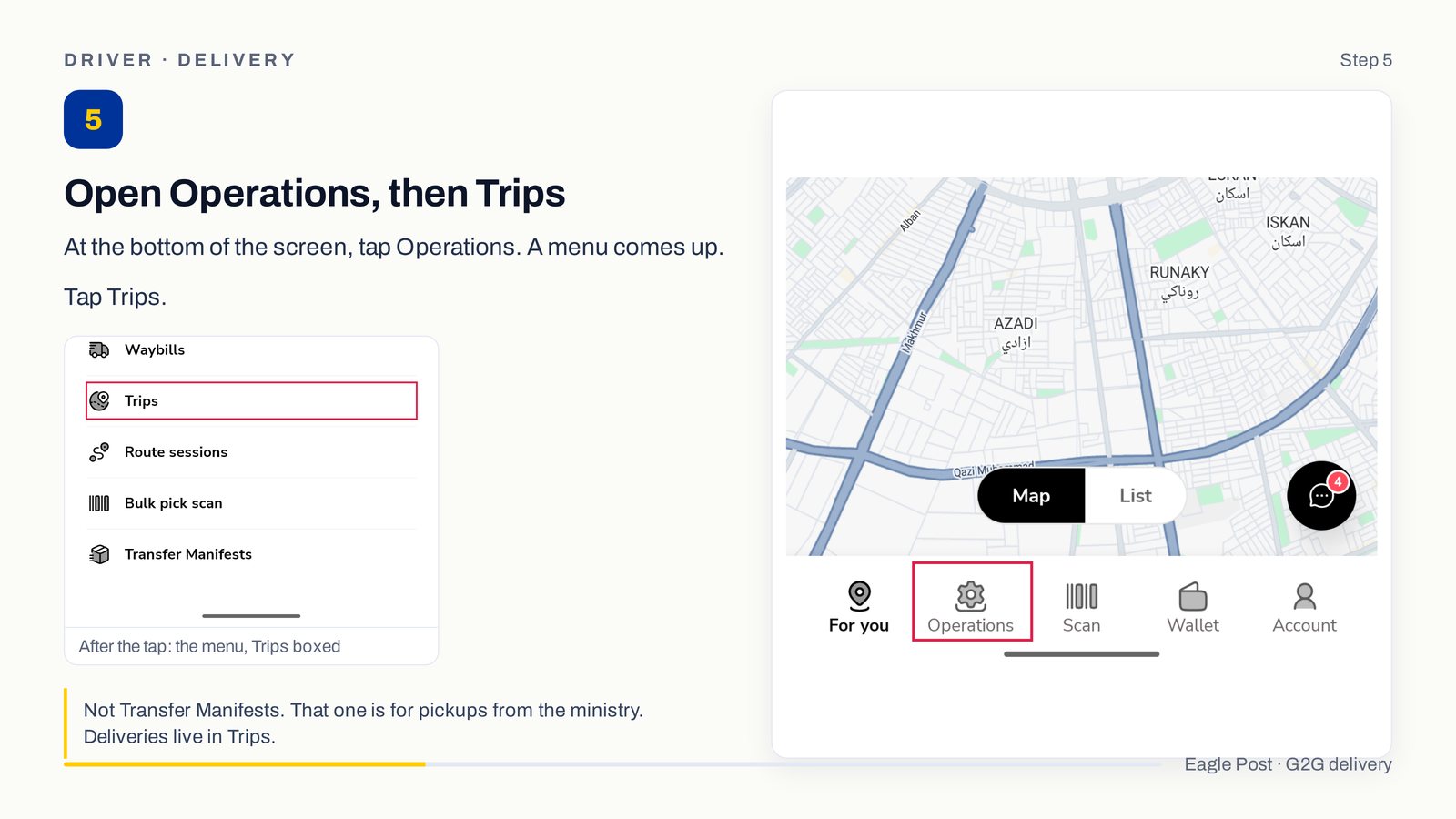
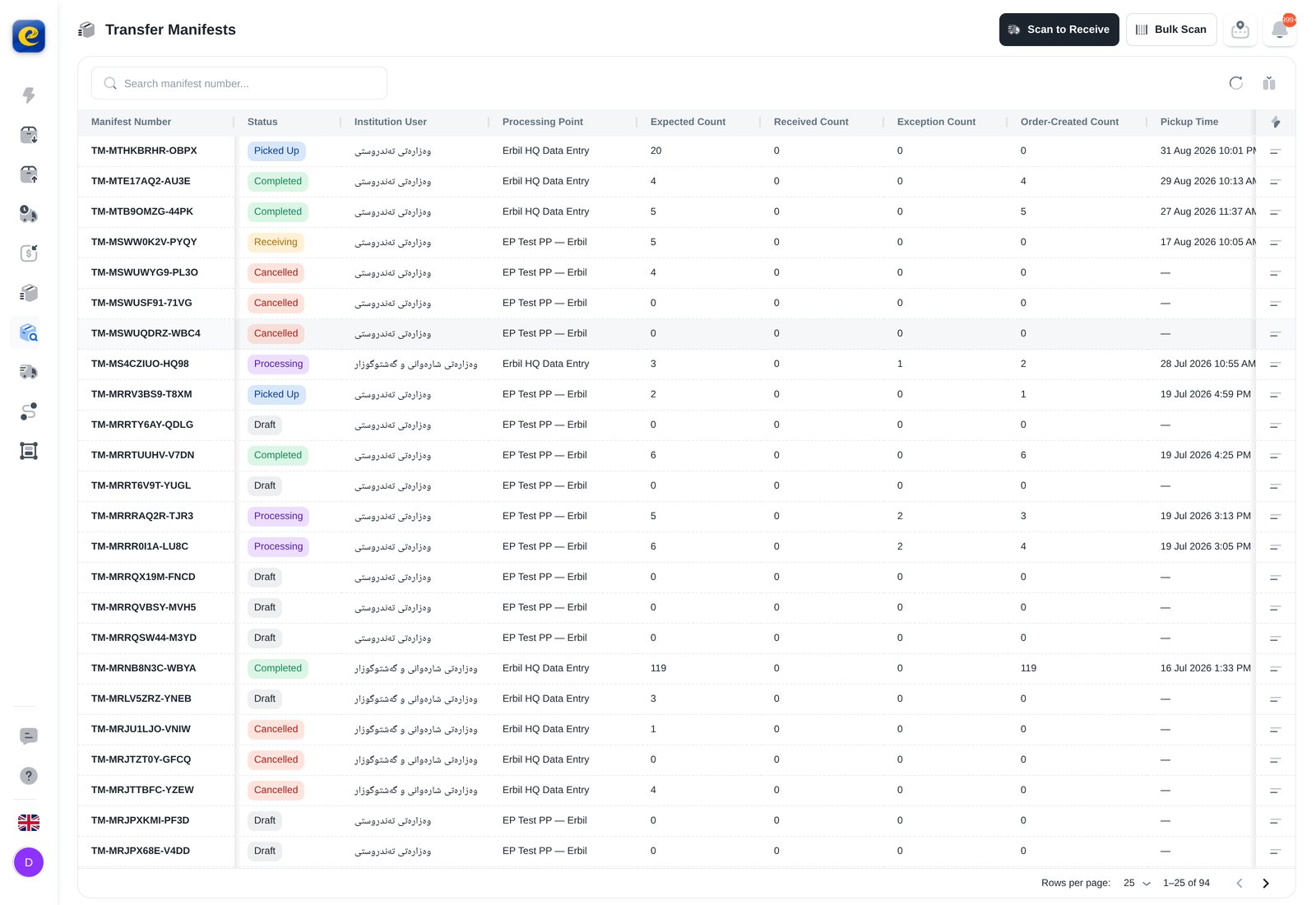
Government mail — G2G — was the module I was brought in to land first. Before it could go live the whole network had to exist in the system: 19 ministries and the other government bodies, 270 offices, and 133,000 barcoded envelopes stocked against them. Then the people. I wrote the training for four teams — drivers, data entry, warehouse, dispatchers — ran the sessions in the first days of September, and set up 32 production accounts so every person trained on the real system with real barcodes in their hands.
The hard part
Two things. The people: an operation that had always worked one way had to work another, and nobody changes because a spec says so. I trained them myself, rolled it out one flow at a time, and built the new process around how they already worked rather than forcing a new one on them.
And the contract: 87 requirements on paper are not the same as what an operation needs. Holding the vendor to the paper while steering the product toward what actually worked on the floor was the balance of the whole job.
Results
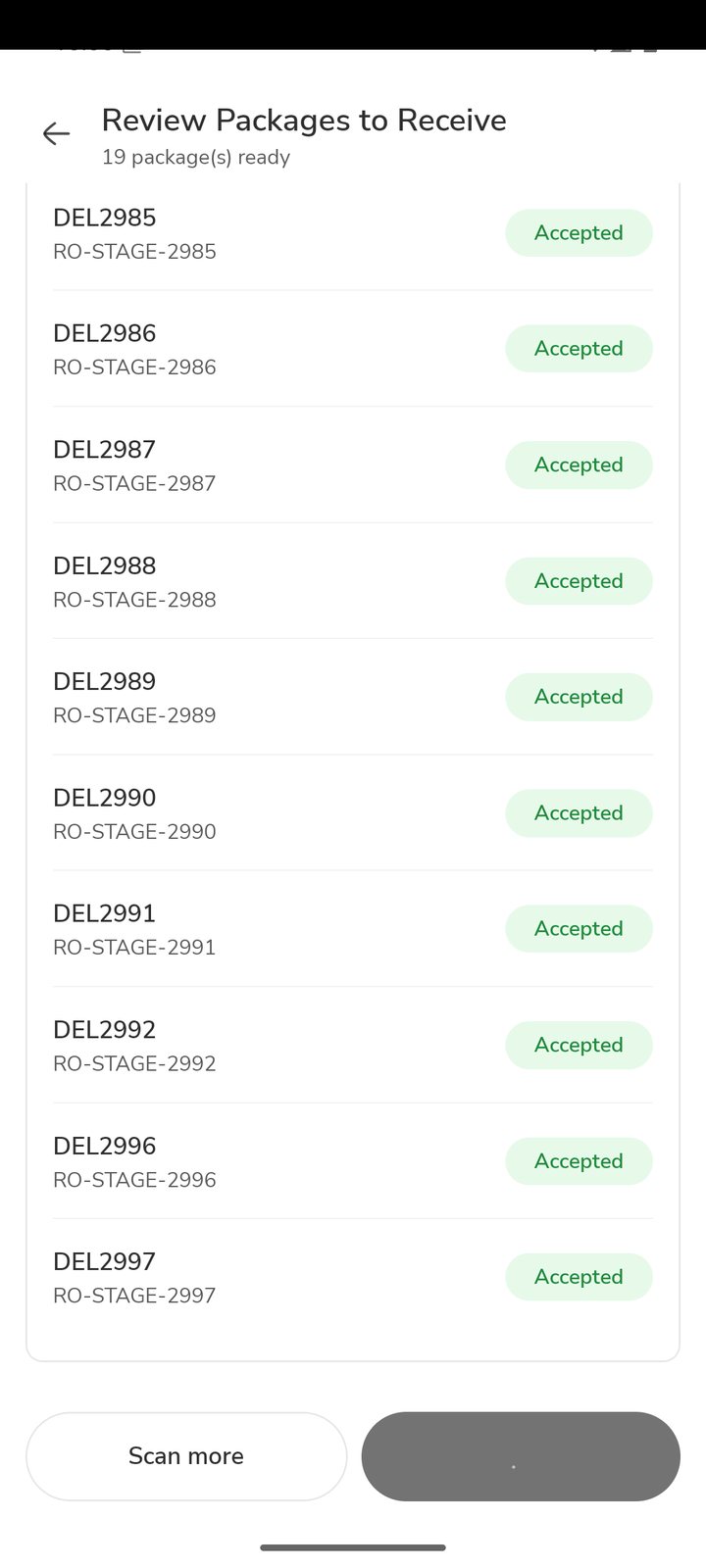
G2G went live on production on 3 September 2026. On the first day, 12 drivers picked up 422 government envelopes from two ministries on 26 manifests, data entry created 443 orders, and 406 of them were received and staged at the main warehouse that evening.
The rest of Ondi — payments, returns, customer service, pricing — is still coming. This is what has shipped so far, as of September 2026.